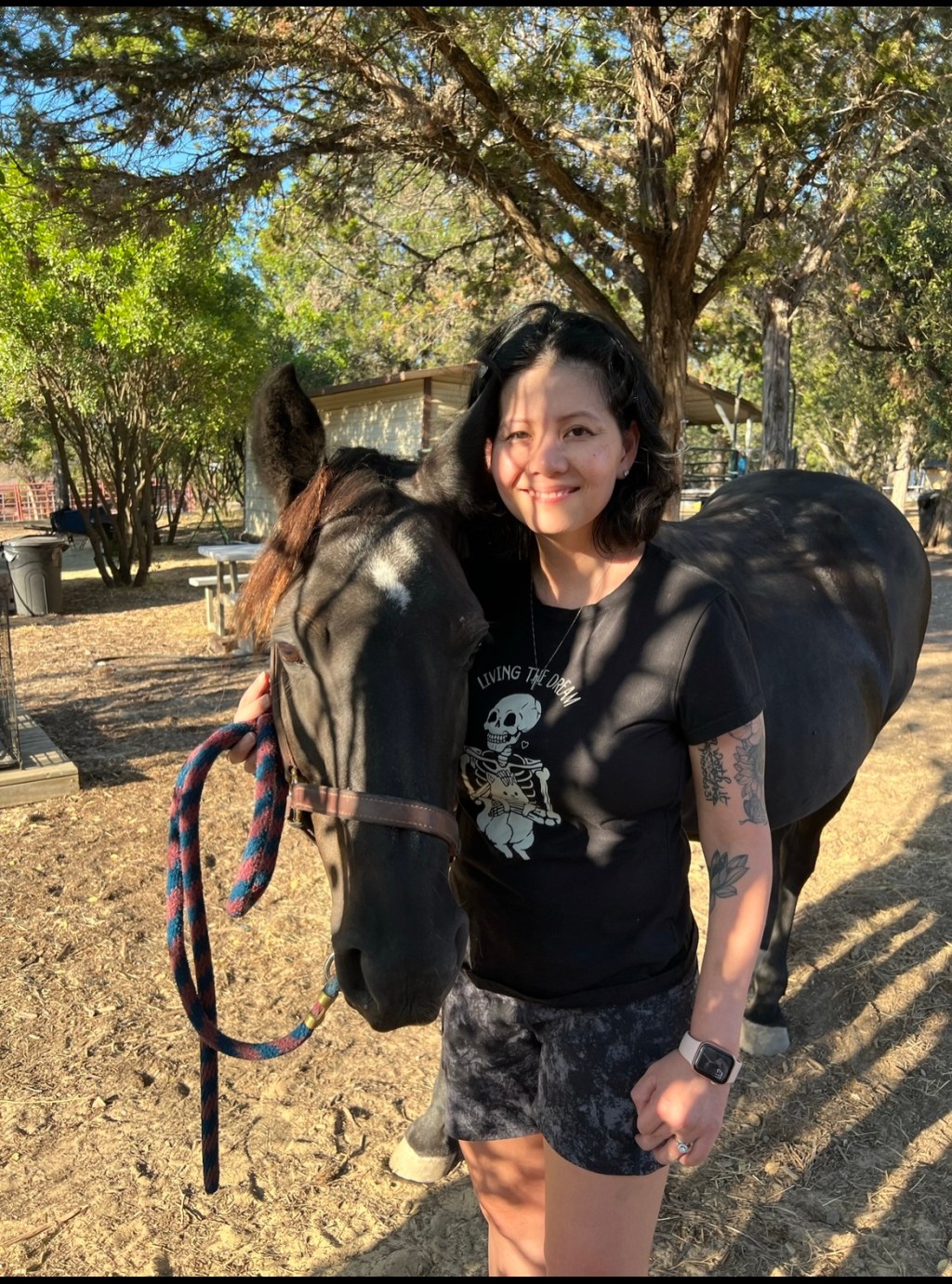
You might be wondering what the heck is hippotherapy. Well it’s not therapy with hippos but being an animal lover, I think that would be awesome! I can totally see myself playing in mud with hippos for therapy as long as they don’t try to eat me. 🥹
“There is something about the outside of a horse that is good for the inside of a man”
Winston Churchill
Hippotherapy is a form of physical, occupational and speech therapy in which a therapist uses the characteristic movements of a horse to provide carefully graded motor and sensory input. A foundation is established to improve neurological function and sensory processing, which can be generalized to a wide range of daily activities. Unlike therapeutic horseback riding (where specific riding skills are taught), the movement of the horse is a means to a treatment goal when utilizing hippotherapy as a treatment strategy. Hippotherapy has been used to treat patients with neurological or other disabilities, such as autism, cerebral palsy, arthritis, multiple sclerosis, head injury, stroke, spinal cord injury, behavioral disorders and psychiatric disorders. The effectiveness of hippotherapy for many of these indications is unclear, and more research has been needed. Here, we purpose to give information about hippotherapy which is not known adequately by many clinicians and health workers.
National Library of Medicine (NLM)
Sitting on the horse assists with trunk control, balance and strength. It’s used to help with building overall postural strength and endurance.
I first heard of hippotherapy through my rehabilitation clinic. They suggested I look into it for my depression. I shared in prior entries my battle with depression. I saw a counselor at my rehabilitation clinic everyday and she was very concerned about my mental health. The clinic knew my love for animals and suggested I look to see if hippotherapy was offered in the city.
I reached out to a friend who knows a lot about horses and she was actually very familiar with the therapy. She gave me some information to a ranch she was familiar with. After a few calls and doing some research online, I found 3 facilities that offered this type of therapy. It must be wonderful because the downside was the wait list was over a year long for all of them.
I decided to continue my current therapy and continue to stay on their waiting list. I applied for all 3 and submitted my paperwork from my doctor. Fast forward 2 years later, one of the clinics finally reached out to me to see if I was still interested. Heck YES I am still interested! I met with Karen for my assessment on September 20, 2023 to find out more information about the therapy.
They also provide therapeutic /adaptive riding which is not the same as hippotherapy. I met Karen who has been in the physical therapy field for over 3 decades and her daughter, Andi who teaches therapeutic riding.
Karen shares with my husband and I how sitting on a moving horse produces a three dimensional movement in the pelvis with each step that mimics human gait including anterior/posterior pelvic tilt, lateral tilt and forward pelvic rotation. Each treatment can average 2000 to 2500 neuromotor inputs to the client and this input provides neural input of normal gait mechanics to the brain. This is particularly effective physically and emotionally for clients who use a wheelchair as a primary or partial means of mobility. The movement of the horse cannot be duplicated by any piece of equipment.
Karen shares her love and passion for this field. She believes what she’s doing is serving the Lord through her work. She has a passion for horses and has been in the therapy field for over 30 years. RISE Equestrian Rehabilitation has been opened since 2016.
Horses are very keen with human emotions and can sense fear, stress, anger, happiness and sadness. They can smell your emotions so it makes them suitable for nonverbal communication and therapy.
Karen walked us around her ranch and stable. If memory serves me correctly, she has 7(?) horses used for therapy. They are on 5 year wait list! They don’t have a high client turnover. The therapy is unique and it’s hard to find therapists who have experience in this field. It is also self pay and not covered by insurance. Because the wait list is so long, she’s offered to have these ‘weekly intensive programs’ where clients can come for an hour everyday for one week. This is different than their normal sessions that are an hour a day, once a week.
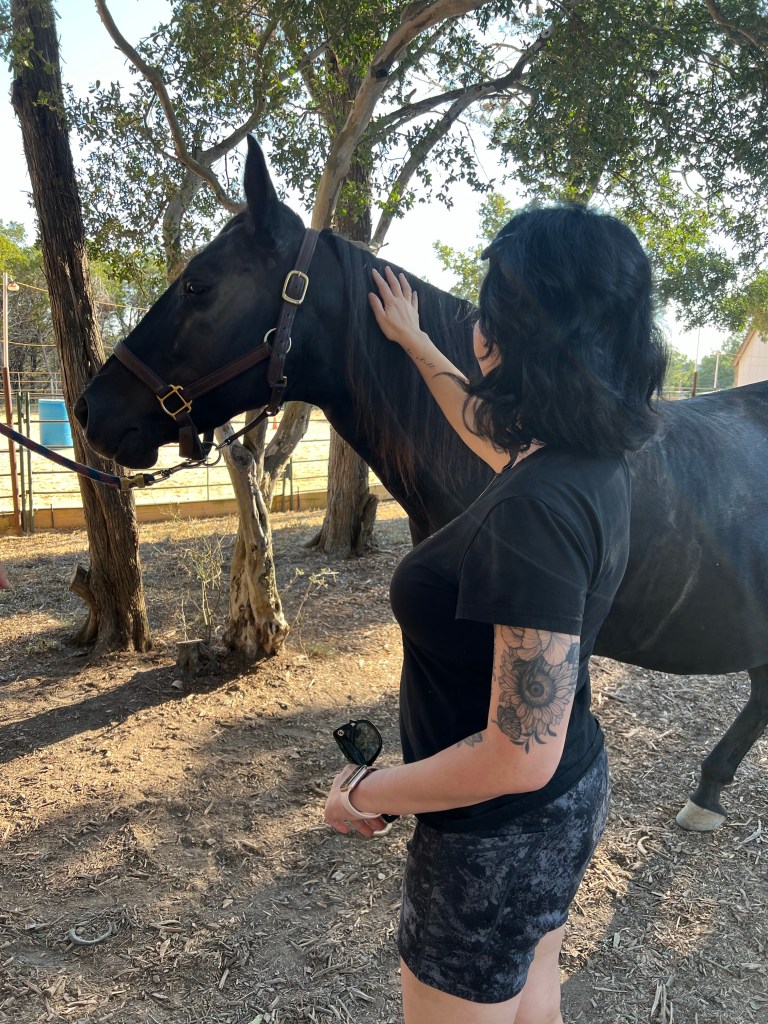
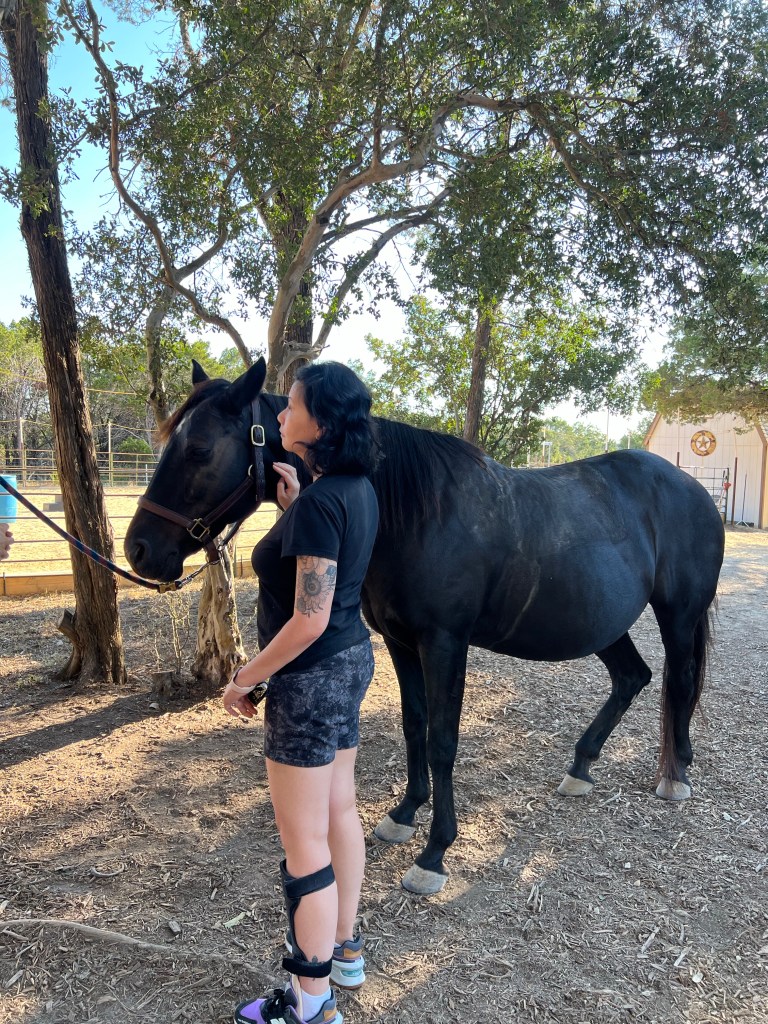
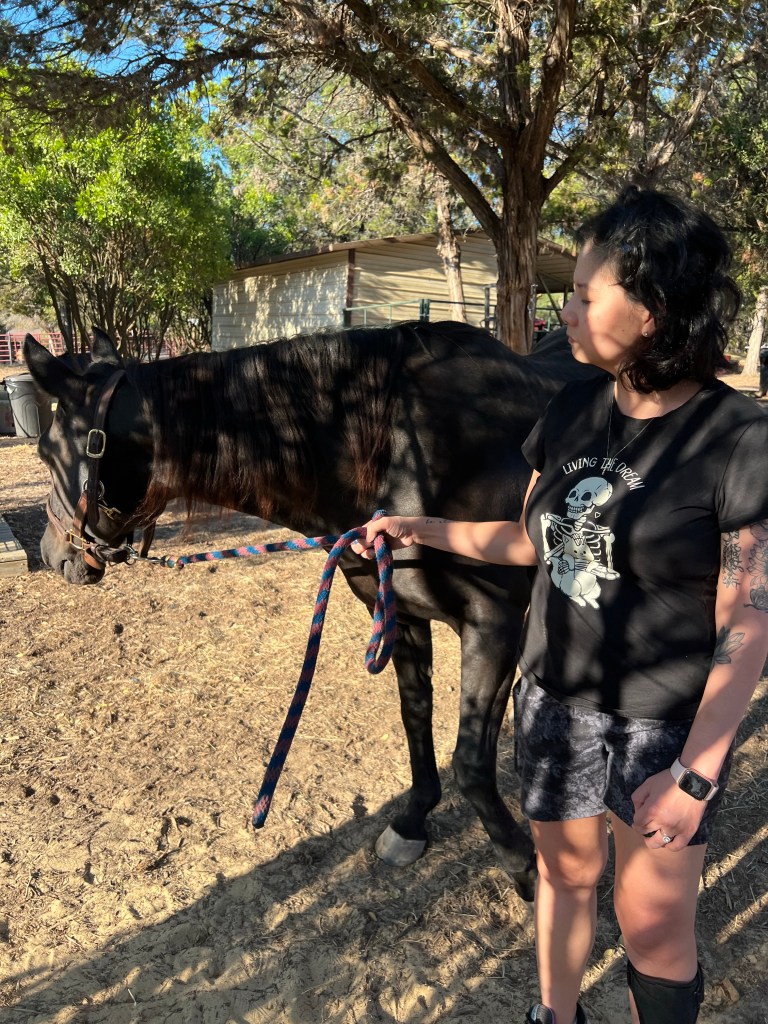
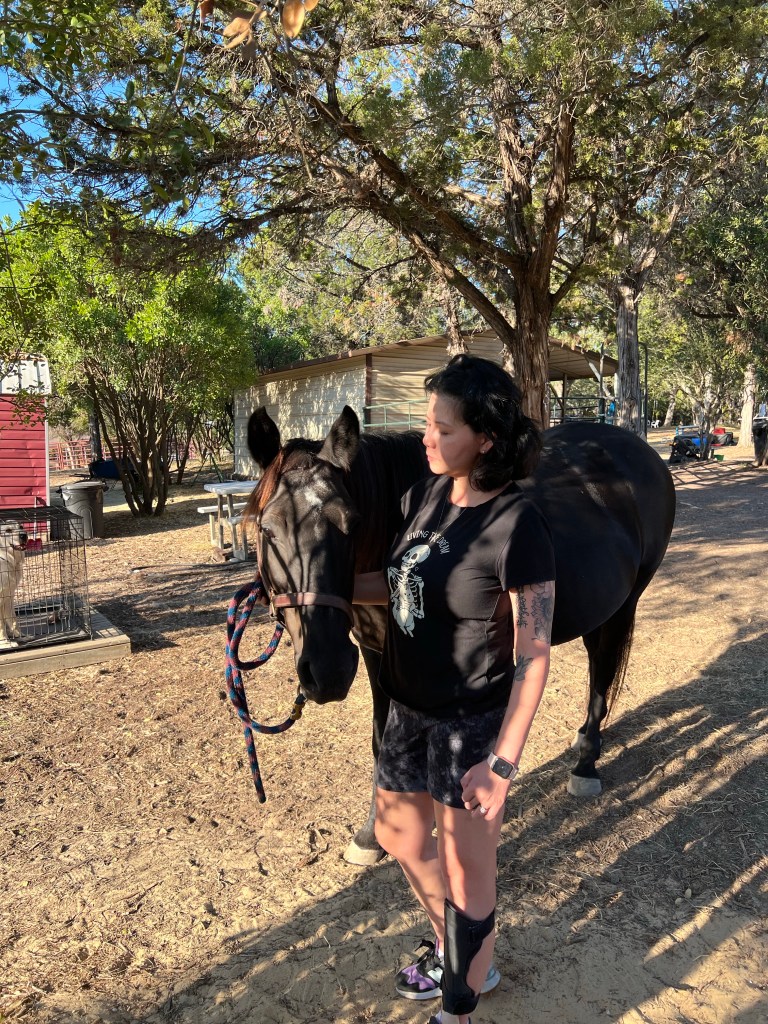
Andi introduces me to Willow. This beautiful, black, majestic creature stood before me and my heart just melted. She’s extremely gentle and gave me a sense of peace just being in her presence. Andi explained part of therapeutic riding was to connect with the horse through grooming. This is where nonverbal communication can help those with autism and depression.
9/20/2023
26 months post stroke
9/20/2023
26 months post stroke
I’m excited to share I will be doing my hippotherapy intensive the week of November 13 – 17 and can’t wait to share with you what I learn! Yee haw!

